
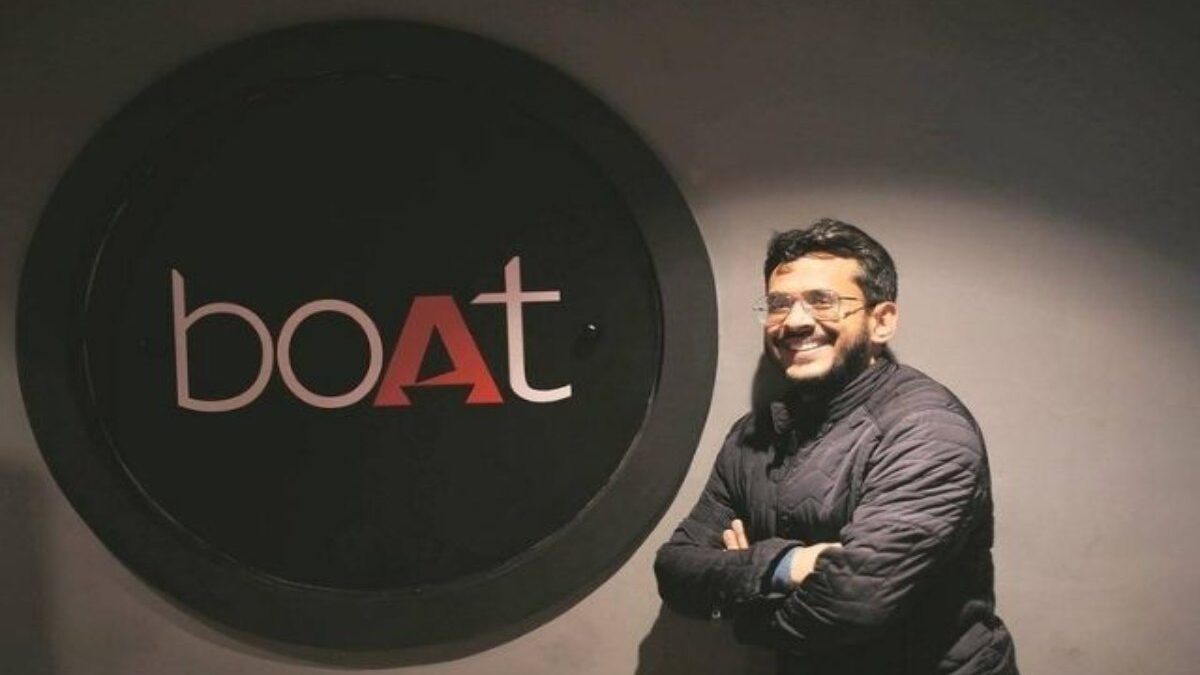
When India’s consumer electronics market was dominated by expensive global brands and unreliable low-cost alternatives, very few believed a homegrown audio company could lead the category. Yet within a few years, boAt did exactly that. At the center of this rise is Aman Gupta, a founder whose success came not from breakthrough technology, but from understanding Indian consumers better than anyone else.
This is not just the story of a brand—it is a case study in timing, positioning, and execution.
Table of Contents
Who Founded boAt?
boAt was founded in 2016 by Aman Gupta and Sameer Mehta.
While Sameer Mehta brought experience in manufacturing and distribution, Aman Gupta played a key role in branding, marketing, and product strategy.
The company was launched with a clear goal:
to offer stylish, durable, and affordable audio products designed specifically for Indian users.
At a time when global brands were expensive and local alternatives lacked quality, boAt found the perfect gap in the market.
Aman Gupta’s Background: Why He Thought Differently
Aman Gupta’s journey does not follow the stereotype of a tech founder.
He is a Chartered Accountant by training, later completing his MBA from the Indian School of Business (ISB). Before boAt, he worked with established companies in the audio and consumer electronics space, including global brands under the Harman ecosystem.
This exposure mattered. Instead of looking at products from an engineering lens, Aman observed:
- How brands priced products far above Indian expectations
- How global companies misunderstood local usage habits
- How branding often mattered more than specifications
These insights shaped boAt’s playbook.
Identifying the Market Gap Others Ignored
Before boAt, the Indian audio market had two extremes:
- Premium international brands priced beyond reach
- Cheap alternatives that failed within months
Aman Gupta identified what most brands ignored:
Indian consumers wanted reliability, design, and affordability—at the same time.
boAt’s early products focused on:
- Strong cables and reinforced joints
- Simple but bold design
- Packaging and branding that appealed to young buyers
Rather than competing on features, boAt competed on use-case relevance.
Growth Built on Consumer Feedback, Not Assumptions
boAt’s early success came from online marketplaces, where customer reviews provided unfiltered feedback. Instead of treating reviews as marketing metrics, the company used them as product research tools.
Design changes, durability improvements, and pricing adjustments were made continuously. This feedback-driven cycle allowed boAt to scale quickly without losing relevance.
Over time, the brand expanded into:
- Wireless audio
- Bluetooth speakers
- Smartwatches and wearables
Each expansion followed the same logic: mass appeal first, premium features later.
Marketing Strategy: Why boAt Felt “Indian”
boAt did not advertise itself as a tech innovator. It marketed itself as a lifestyle companion.
Key elements of its branding strategy included:
- Youth-focused visuals and language
- Collaborations with athletes, musicians, and creators
- Strong presence during cultural and sporting events
This approach made boAt feel less like a gadget company and more like a brand people could relate to.
Aman Gupta and Shark Tank India: Influence Beyond boAt
Aman Gupta became widely recognized after joining Shark Tank India as an investor. His role on the show reinforced the qualities he was already known for in business circles—practical thinking, direct communication, and an emphasis on execution over hype.
On the show, he often highlights:
- The importance of distribution
- Realistic valuation expectations
- Brand strength as a long-term asset
His presence also helped normalize entrepreneurship for a wider audience, particularly young founders outside metro cities.
Business Model: Why boAt Scaled Faster Than Competitors
boAt operates on a D2C-led hybrid model, combining online platforms with offline retail expansion.
What stands out is not the model itself, but the discipline behind it:
- Tight control over branding
- Focused product launches rather than over-diversification
- Aggressive but calculated pricing
By avoiding unnecessary complexity, boAt maintained speed—something many competitors struggled with.
Challenges and Realities Behind the Success
boAt’s journey has not been without challenges. Rapid scaling brought issues related to:
- Quality consistency
- Supply chain dependency
- Increasing competition in wearables
Aman Gupta has acknowledged that sustaining leadership requires constant evolution—not just expansion. This realism has helped the brand adapt rather than stagnate.
What Entrepreneurs Can Learn from Aman Gupta
The boAt story offers lessons that go beyond electronics:
- Deep customer understanding beats technological novelty
- Branding is not superficial—it is strategic
- Timing and execution often matter more than originality
- Feedback is a growth tool, not criticism
Final Thoughts
Aman Gupta did not build boAt by reinventing technology. He built it by respecting the consumer, listening carefully, and executing relentlessly. In a market where many startups chase trends, boAt succeeded by staying grounded in everyday needs.
