
Table of Contents
Introduction
Search Engine Optimization (SEO) is one of the most important strategies for improving a website’s visibility on search engines like Google, Bing, and Yahoo. In today’s digital world, businesses, bloggers, and website owners rely heavily on SEO to attract organic traffic without paying for advertisements.
Every day, millions of people search for information online. If your website appears on the first page of search engine results, it has a higher chance of getting visitors. SEO helps websites rank higher in search results by optimizing different aspects such as content quality, keywords, website structure, and page speed.
SEO is divided into several types, including On-Page SEO, Off-Page SEO, and Technical SEO. Among these, On-Page SEO focuses on optimizing individual pages of a website to make them more search engine friendly and user friendly.
What Is SEO and How It Works
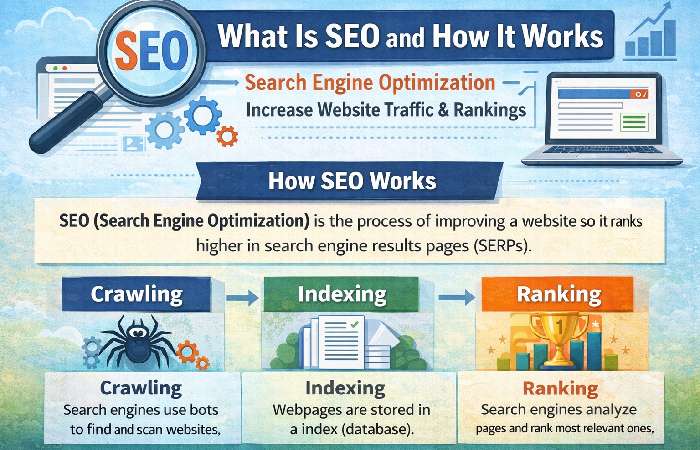
SEO (Search Engine Optimization) is the process of improving a website so that it ranks higher in search engine results pages (SERPs). The goal of SEO is to increase organic traffic, which means visitors who find your website naturally through search engines rather than through paid advertisements.
Search engines use complex algorithms to determine which pages should appear in search results. These algorithms analyze hundreds of ranking factors such as keywords, content quality, backlinks, page speed, and user experience.
How SEO Works
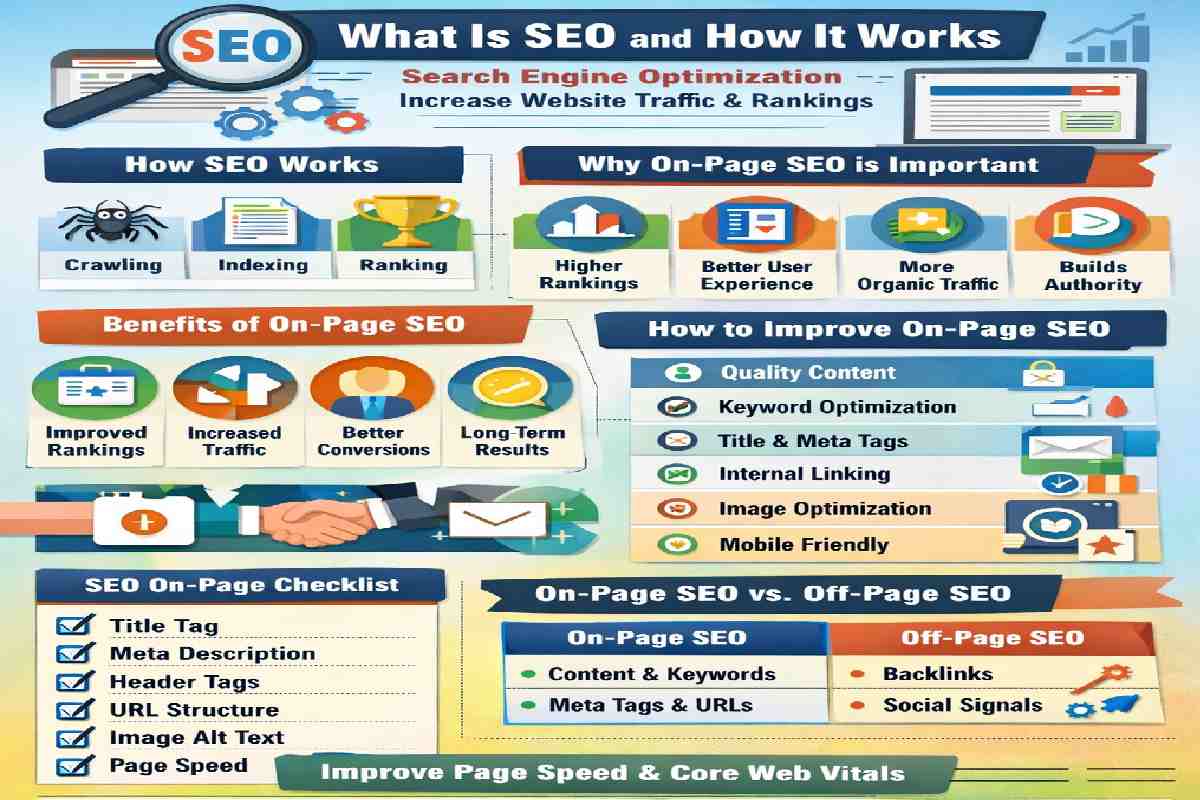
SEO works through three main processes:
1. Crawling
Search engines use automated programs called crawlers or spiders to scan websites across the internet. These bots follow links from one page to another to discover new content.
2. Indexing
After crawling a webpage, the search engine stores its information in a large database called an index. Pages that are indexed can appear in search results.
3. Ranking
When a user searches for something, search engines analyze their index and display the most relevant pages based on ranking factors like keyword relevance, quality content, and authority.
Websites that follow SEO best practices have a better chance of appearing on the first page of search results.
Why Is On-Page SEO Important
On-Page SEO refers to all the optimization techniques applied directly to a webpage. It includes optimizing titles, meta descriptions, headings, keywords, images, and internal links.
On-Page SEO is important because it helps search engines understand what your webpage is about. If your page is properly optimized, search engines can easily crawl and rank your content.
Key Reasons Why On-Page SEO Matters
1. Helps Search Engines Understand Content
On-Page SEO makes it easier for search engines to analyze your webpage and determine its topic.
2. Improves Search Rankings
Proper keyword placement and content structure help your page rank higher in search results.
3. Enhances User Experience
Optimized content, fast page speed, and mobile-friendly design make websites easier for visitors to use.
4. Increases Organic Traffic
Better rankings mean more visibility and more visitors.
5. Builds Website Authority
High-quality content and structured pages improve credibility and trust.
Without On-Page SEO, even the best content may struggle to rank well on search engines.
Benefits of On-Page SEO
Implementing On-Page SEO offers several advantages for website owners and businesses.
1. Higher Search Engine Rankings
Optimized pages have a greater chance of ranking on the first page of search results.
2. Better User Experience
SEO improvements such as readable content, faster loading pages, and clear navigation make websites easier to use.
3. Increased Website Traffic
Higher rankings naturally bring more visitors to your website.
4. Better Conversion Rates
When users find relevant information quickly, they are more likely to become customers or subscribers.
5. Long-Term Results
Unlike paid advertising, SEO can provide long-term traffic growth.
6. Improved Website Structure
On-Page SEO encourages organized content with proper headings and internal links.
7. Cost-Effective Marketing
SEO is one of the most affordable digital marketing strategies because organic traffic does not require advertising costs.
SEO Experts – Roles and Responsibilities
| SEO Expert Role | Responsibilities |
| SEO Analyst | Research keywords, analyze search trends, and monitor website performance |
| On-Page SEO Specialist | Optimize titles, headings, content, and images |
| Technical SEO Expert | Improve website structure, crawling, indexing, and page speed |
| Link Building Specialist | Build backlinks from authoritative websites |
| SEO Content Writer | Create optimized blog posts and web content |
| SEO Manager | Develop overall SEO strategy and monitor results |
SEO experts work together to ensure a website ranks well in search engines and attracts more visitors.
How to Improve On-Page SEO
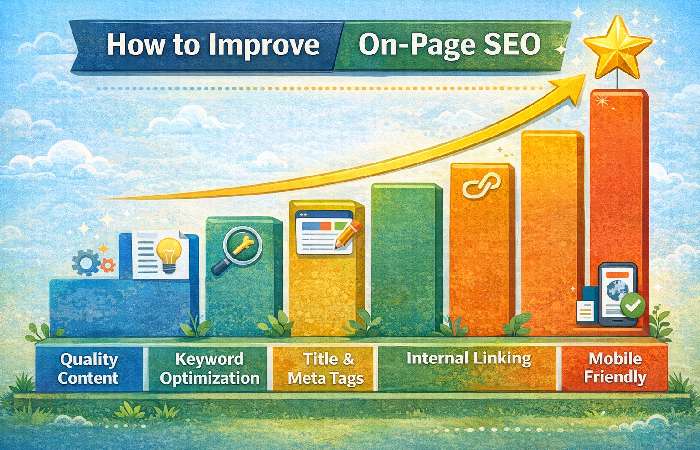
Improving On-Page SEO requires optimizing several elements within a webpage. Below are some of the most effective strategies.
1. Use Proper Keywords
Keyword research helps identify the words and phrases people search for online. Including these keywords naturally in titles, headings, and content helps search engines understand your topic.
2. Write High-Quality Content
Content should be informative, engaging, and valuable for readers. Search engines prioritize content that answers user questions.
3. Optimize Title Tags
The title tag is one of the most important ranking factors. It should include the main keyword and clearly describe the page.
4. Improve Meta Descriptions
Meta descriptions summarize the page content and encourage users to click on the link in search results.
5. Use Heading Tags
Headings (H1, H2, H3) help organize content and improve readability.
6. Optimize Images
Images should have descriptive file names and alt text so search engines understand them.
7. Add Internal Links
Internal links connect different pages within your website and help search engines crawl your content.
8. Make Your Website Mobile Friendly
Most users browse the internet on smartphones. A mobile-friendly website improves user experience and rankings.
9. Improve URL Structure
URLs should be short, descriptive, and include keywords.
10. Increase Page Speed
Fast-loading pages provide a better user experience and improve rankings.
SEO On-Page Checklist
| SEO Factor | Description |
| Title Tag | Include primary keyword in the title |
| Meta Description | Write a clear summary with keywords |
| URL Structure | Keep URLs short and descriptive |
| Headings | Use H1, H2, and H3 tags properly |
| Keyword Placement | Use keywords naturally in content |
| Image Optimization | Use alt text and compressed images |
| Internal Links | Link to other relevant pages |
| Mobile Optimization | Ensure website works well on smartphones |
| Content Quality | Provide useful and original content |
| Page Speed | Improve loading time |
Following this checklist helps ensure your pages are fully optimized for search engines.
SEO On-Page vs Off-Page
| Feature | On-Page SEO | Off-Page SEO |
| Definition | Optimization done within the website | Optimization done outside the website |
| Focus | Content, keywords, meta tags, images | Backlinks, social signals, brand mentions |
| Control | Fully controlled by website owner | Depends on external websites |
| Examples | Title tags, internal links, page speed | Guest blogging, link building |
| Purpose | Improve page relevance | Improve website authority |
Improve Page Speed & Core Web Vitals
Page speed is an important ranking factor. Websites that load quickly provide a better user experience and are more likely to rank higher in search results.
Google also measures user experience through Core Web Vitals, which focus on three main metrics.
1. Largest Contentful Paint (LCP)
Measures how quickly the main content loads. Ideally, it should load within 2.5 seconds.
2. First Input Delay (FID)
Measures how quickly a page responds when a user interacts with it.
3. Cumulative Layout Shift (CLS)
Measures how stable the page layout is while loading.
Ways to Improve Page Speed
• Compress images
• Use faster hosting
• Enable browser caching
• Minimize CSS and JavaScript files
• Use a Content Delivery Network (CDN)
• Optimize website code
Improving these factors helps your website perform better and rank higher in search engines.
Conclusion
SEO is a powerful digital marketing strategy that helps websites rank higher in search engines and attract organic traffic. By understanding how search engines work and applying the right optimization techniques, website owners can significantly improve their online visibility.
On-Page SEO plays a crucial role in ensuring that webpages are properly structured, keyword optimized, and user friendly. Elements such as title tags, meta descriptions, headings, content quality, and page speed all contribute to better search rankings.
