
Table of Contents
Introduction
Software development is the backbone of today’s digital economy. From mobile apps to enterprise systems, every product is built using a structured methodology called a software development model.
Choosing the right model improves quality, reduces risks, and ensures projects are delivered on time and within budget. In this guide, we’ll explore software development models, processes, comparisons, careers, salaries, and how to choose the best one.
What Are Software Development Models?
Software development models are structured frameworks that guide the planning, design, development, testing, and deployment of software systems.
They define:
- How requirements are gathered
- How coding is performed
- How testing is conducted
- How changes are managed
- How final delivery happens
Different projects require different models depending on complexity, budget, and flexibility needs.
Visual Overview of Popular Models
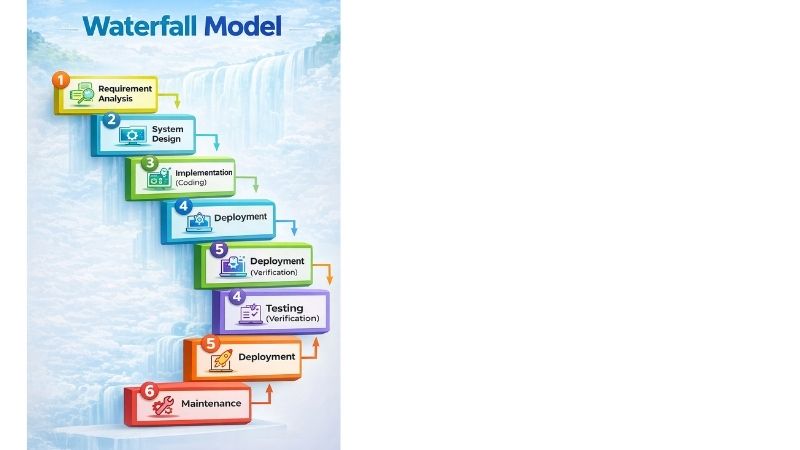
Requirement Analysis
-
Collect business and user requirements
-
Define system objectives
-
Prepare Software Requirement Specification (SRS)
-
Finalize scope before moving forward
This phase defines what needs to be developed.
System Design
-
Create system architecture
-
Design database and technical framework
-
Prepare UI/UX mockups
-
Select programming languages and tools
This phase defines how the system will be built.
Implementation (Coding)
-
Developers write program code
-
Build modules based on design documents
-
Integrate different components
This is where actual software development happens.
Testing (Verification)
-
Perform unit testing
-
Conduct integration testing
-
System testing to detect bugs
-
Ensure software meets requirements
This phase ensures quality and correctness.
Deployment
-
Release software to users
-
Install system in production environment
-
Provide initial support
The product becomes available for real use.
Maintenance
-
Fix post-launch bugs
-
Update features
-
Improve performance
-
Provide long-term technical support
This phase continues after deployment for the lifetime of the software.
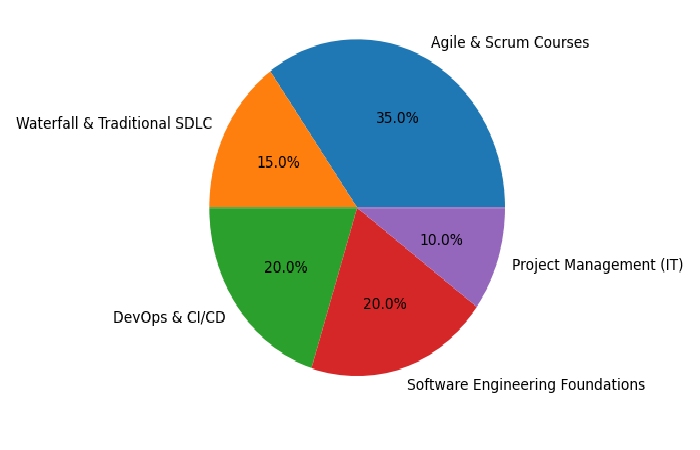
Software Development Models Courses
| Platform | Course | Level | Approx Cost |
| Coursera | Software Development Lifecycle | Beginner–Intermediate | $49–$99 |
| Udemy | SDLC & Agile Crash Course | Beginner | $20–$50 |
| edX | Software Engineering Essentials | Intermediate | $100–$300 |
| Simplilearn | Agile & Scrum Certification | Professional | ₹15,000–₹40,000 |
| IIT Bombay | Software Engineering Program | Advanced | ₹25,000+ |
Software Development Models Jobs and Salaries
India
| Role | Average Salary (₹ LPA) | Preferred Model Knowledge |
| Software Developer | 6–12 | Agile, Iterative |
| Scrum Master | 10–18 | Agile |
| Project Manager | 15–30 | Agile, Spiral |
| QA Engineer | 5–10 | V-Model |
| DevOps Engineer | 8–20 | Agile |
United States
| Role | Average Salary (USD) | Preferred Model Knowledge |
| Software Engineer | $90k–$130k | Agile |
| Product Manager | $110k–$160k | Agile, Iterative |
| Technical Project Manager | $120k–$170k | Agile, Spiral |
| QA Analyst | $70k–$100k | V-Model |
| DevOps Engineer | $100k–$150k | Agile |
Software Development Models Comparison
| Feature | Waterfall | Agile | Spiral | V-Model | Iterative |
| Flexibility | Low | High | Medium | Low | Medium |
| Risk Handling | Low | Medium | High | Medium | Medium |
| Documentation | Heavy | Light | Moderate | Heavy | Moderate |
| Client Involvement | Low | High | High | Medium | Medium |
| Best For | Fixed Scope | Changing Needs | Large Risky Projects | Regulated Systems | Evolving Systems |
How to Choose the Best Software Development Model
Choosing the right software development model is critical for project success. There is no universal “best” model — the right choice depends on your project requirements, team structure, risk level, and business goals.
Understand Project Requirements Clearly
If your requirements are:
- Fixed and well-defined → Choose Waterfall
- Likely to change frequently → Choose Agile
- High-risk and complex → Choose Spiral
Clear requirements reduce confusion and rework.
Consider Project Size & Complexity
| Project Type | Recommended Model |
| Small & Simple | Waterfall |
| Medium & Flexible | Agile |
| Large & High-Risk | Spiral |
| Regulated Systems (Banking, Healthcare) | V-Model |
| Product with Gradual Expansion | Iterative |
Evaluate Risk Level
- High technical risk → Spiral Model
- Low risk with stable scope → Waterfall
- Medium risk with evolving scope → Agile or Iterative
Risk management is essential in enterprise-level projects.
Assess Client Involvement
- Client wants regular feedback → Agile
- Client prefers final delivery → Waterfall
- Client involved in validation/testing → V-Model
Agile works best when clients collaborate continuously.
Analyze Budget & Timeline
- Fixed budget and deadline → Waterfall
- Flexible scope and timeline → Agile
- Long-term enterprise system → Spiral
Budget flexibility often determines the methodology.
Check Team Expertise
- Experienced cross-functional team → Agile
- Structured documentation-focused team → Waterfall or V-Model
- Risk-analysis specialists available → Spiral
Agile requires strong collaboration and communication skills.
Regulatory & Compliance Requirements
Industries like:
- Banking
- Healthcare
- Defense
Often prefer V-Model or Waterfall due to strict documentation and validation needs.
Models in Software Engineering
In software engineering, models help:
- Improve project management
- Reduce failure rates
- Enhance quality assurance
- Increase client satisfaction
- Streamline documentation
Modern organizations often combine models (Hybrid Approach) such as Agile + DevOps.
FAQs
1. Which software development model is best?
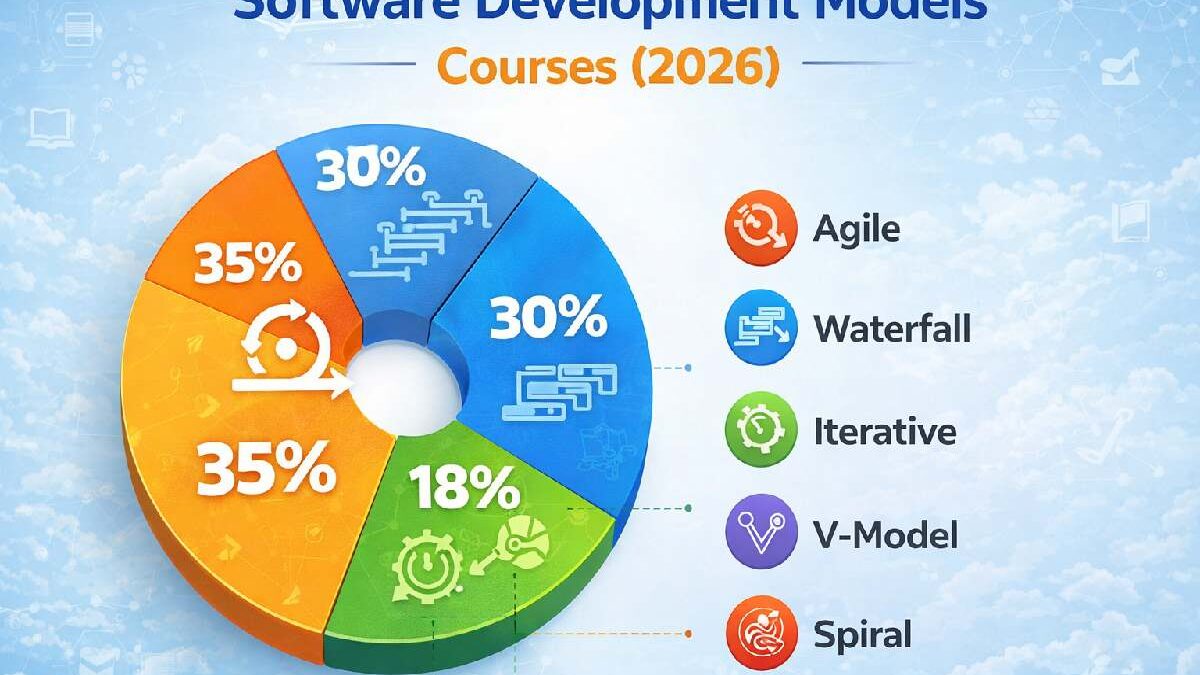
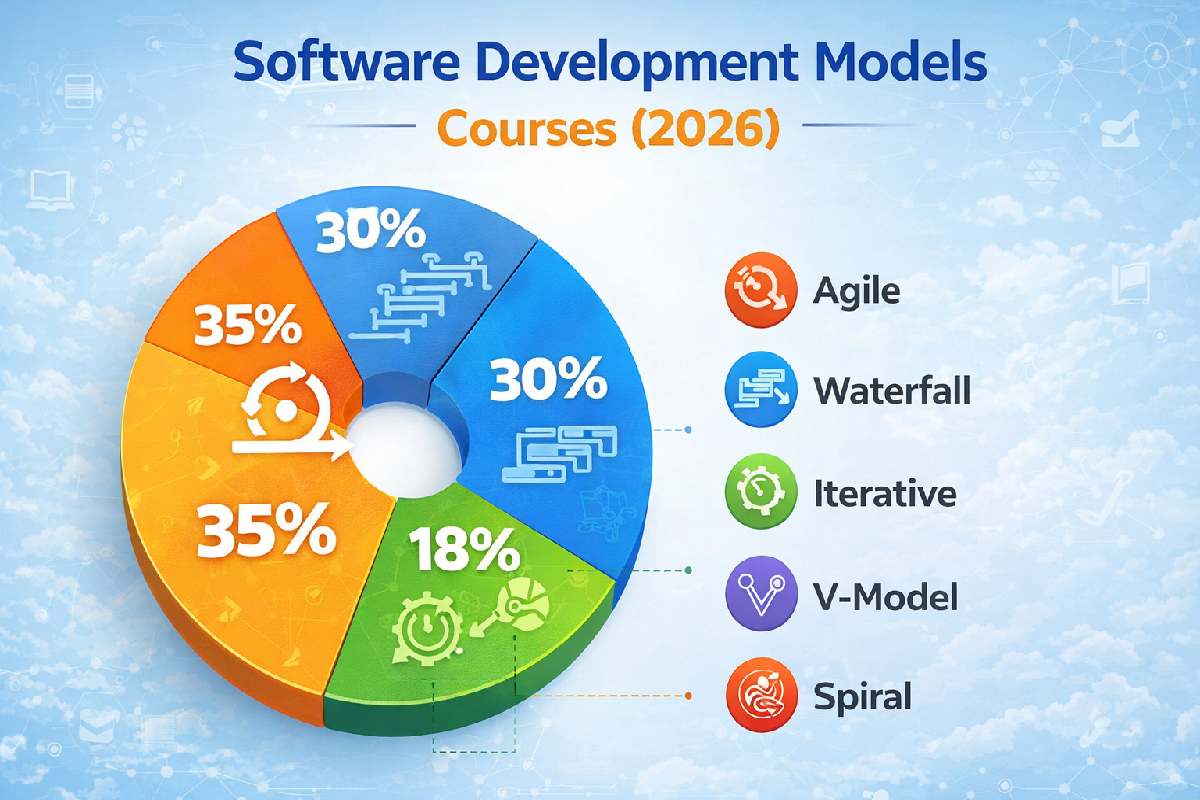
Agile is most popular in 2026 due to flexibility, but it depends on project needs.
2. Is Waterfall outdated?
Not completely. It works well for fixed-scope, small, or government projects.
3. What is the difference between Agile and Iterative?
Agile is a specific methodology with collaboration focus, while Iterative is a general repeating-cycle approach.
4. Which model is highest paying?
Knowledge of Agile and Scrum frameworks often leads to higher-paying roles like Scrum Master or Project Manager.
5. Can companies combine models?
Yes. Many companies use Hybrid or Agile-DevOps combinations.
Conclusion
Software development models are essential frameworks that guide the creation of high-quality software systems. Whether using Waterfall for structured projects or Agile for flexible innovation, choosing the right model directly impacts success.
In 2026, Agile dominates the industry, but understanding multiple models increases career opportunities and salary potential.
Mastering software development models makes you more competitive in the tech industry and prepares you for leadership roles in software engineering.
